One technician. The whole yearly test.
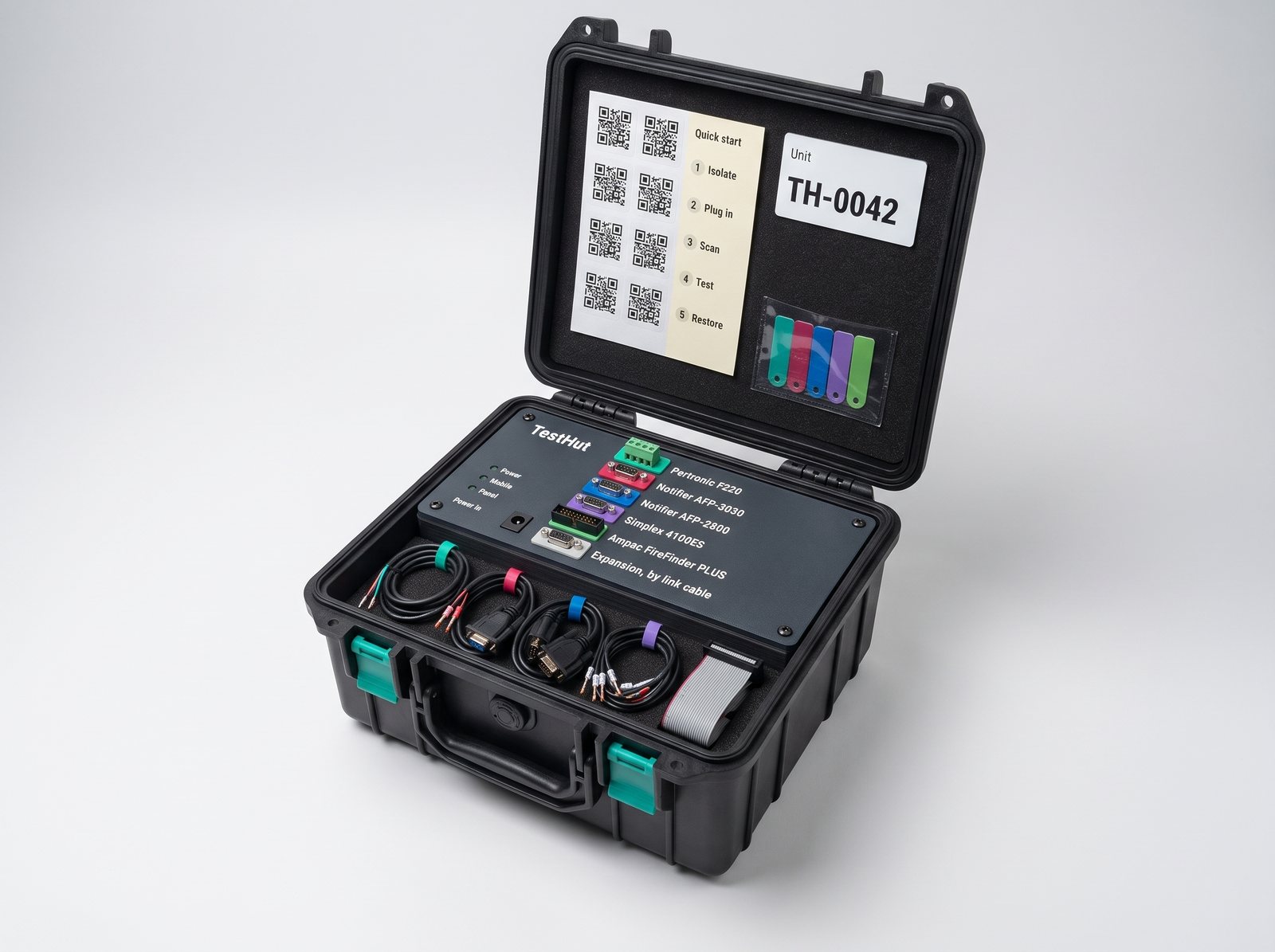
TestHut is a carry case that plugs into the fire panel's printer port, and a phone app that counts every device you set off against AS 1851. Nobody has to stand at the panel calling out zones.
The second technician is only there to read the panel
On a yearly test one person walks the building with the smoke pole. The other stands at the panel, reads out what came up, and writes it down. That is two wages for one job.
The panel already sends every alarm to its printer port. TestHut reads that output and sends it over the mobile network to your TestHut account. The person doing the testing sees it in the app within seconds, and the office sees it in the portal at the same moment.
- Today2 technicians over 2 days
- With TestHut1 technician over 2 days
- 09:14:02ALARM L1 D014 SMOKE
LVL 3 EAST CORRIDORcounted - 09:15:40ALARM L1 D015 SMOKE
LVL 3 STORE ROOMcounted - 09:17:11ALARM L1 D019 HEAT
LVL 3 KITCHENcounted - 09:19:26ALARM L2 D003 MCP
LVL 3 STAIR 2 EXITcounted - 09:22:05ALARM L2 D007 SMOKE
LVL 3 PLANT ROOMcounted
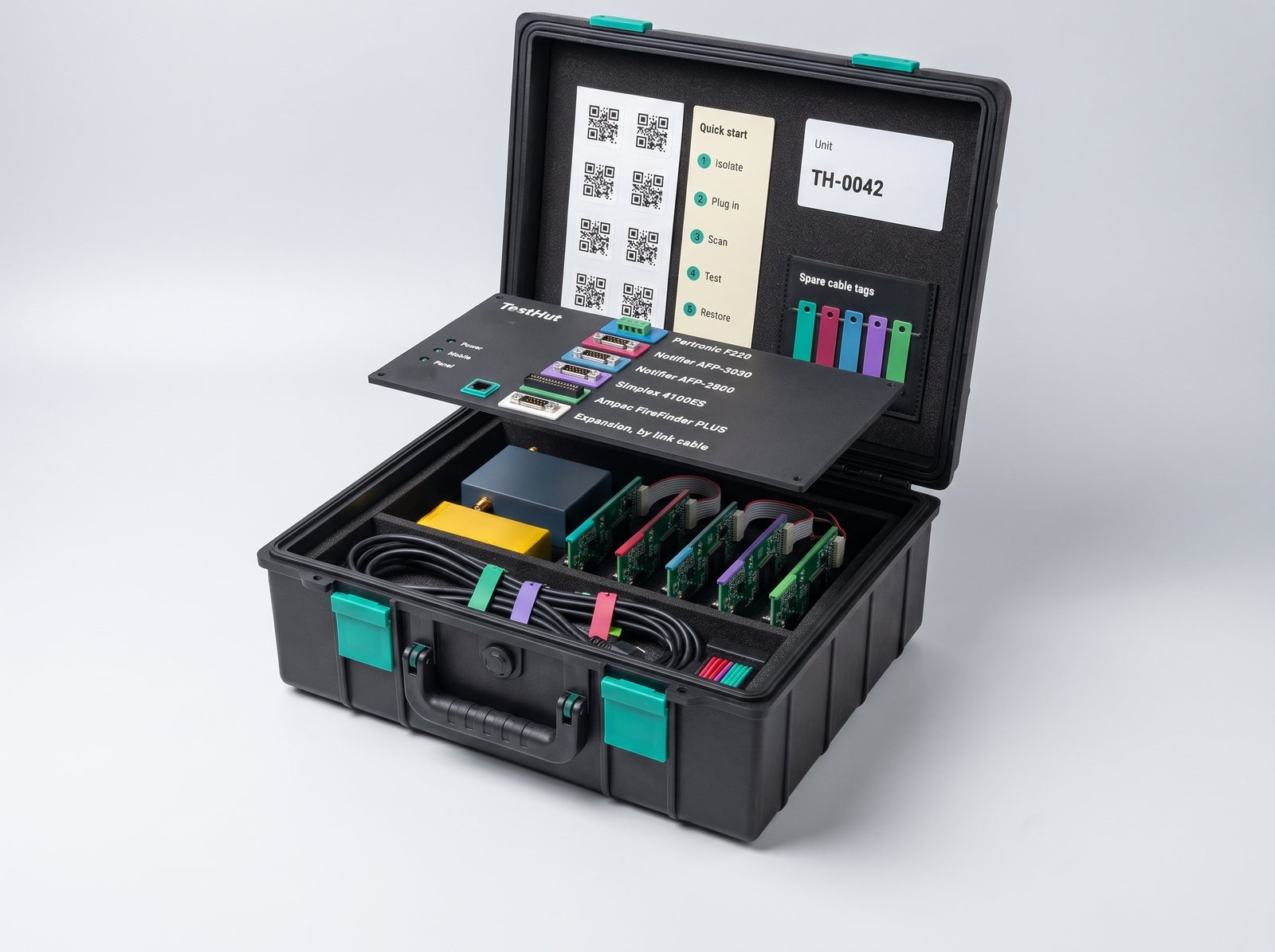
One case, one lead to the panel
Everything the job needs is in the case. The gateway, battery and cards sit under a fixed cover, so the technician only ever handles one lead.
You buy a base unit and add a card pack for each panel family you look after.
What a test day looks like
Scan the label on the panel
Each registered panel carries a QR label. Scanning it, with the phone's location, loads that building's device list and the right settings for that panel type.
Plug the case into the panel
One lead from the case to the panel's printer port. The case has its own battery, so it takes nothing from the panel.
Put the panel in its walk test mode
The app shows the steps for that panel, taken from the manufacturer's manual. Isolate the brigade signal the way you do today.
Walk the building
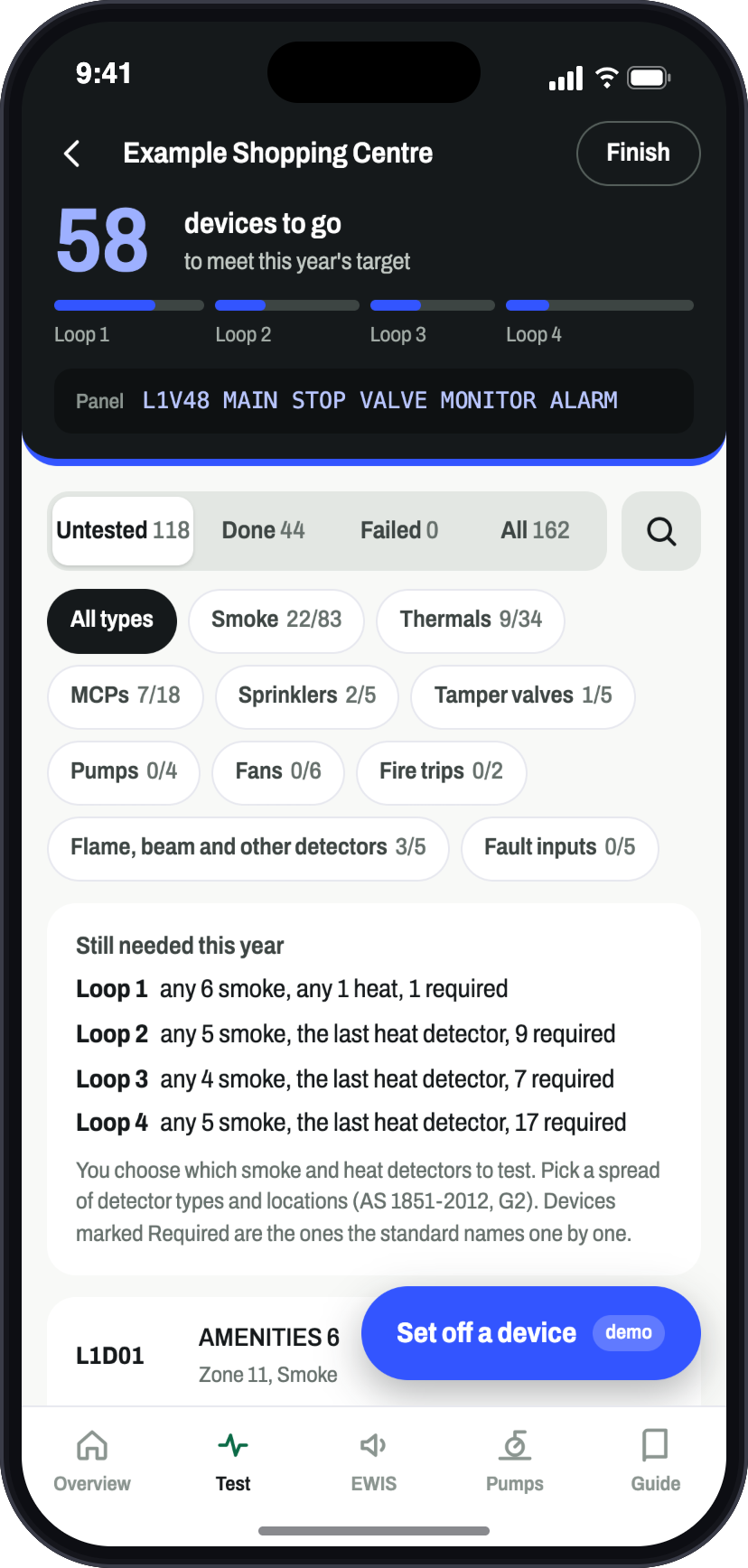
Set off a detector and it ticks off on the phone within seconds. The app shows what is still needed on each circuit to meet the year.
Sign off on site
Failures, notes and photos are recorded as you go. The office sees the results in the portal and the report is ready the same day.
It counts the way the standard counts
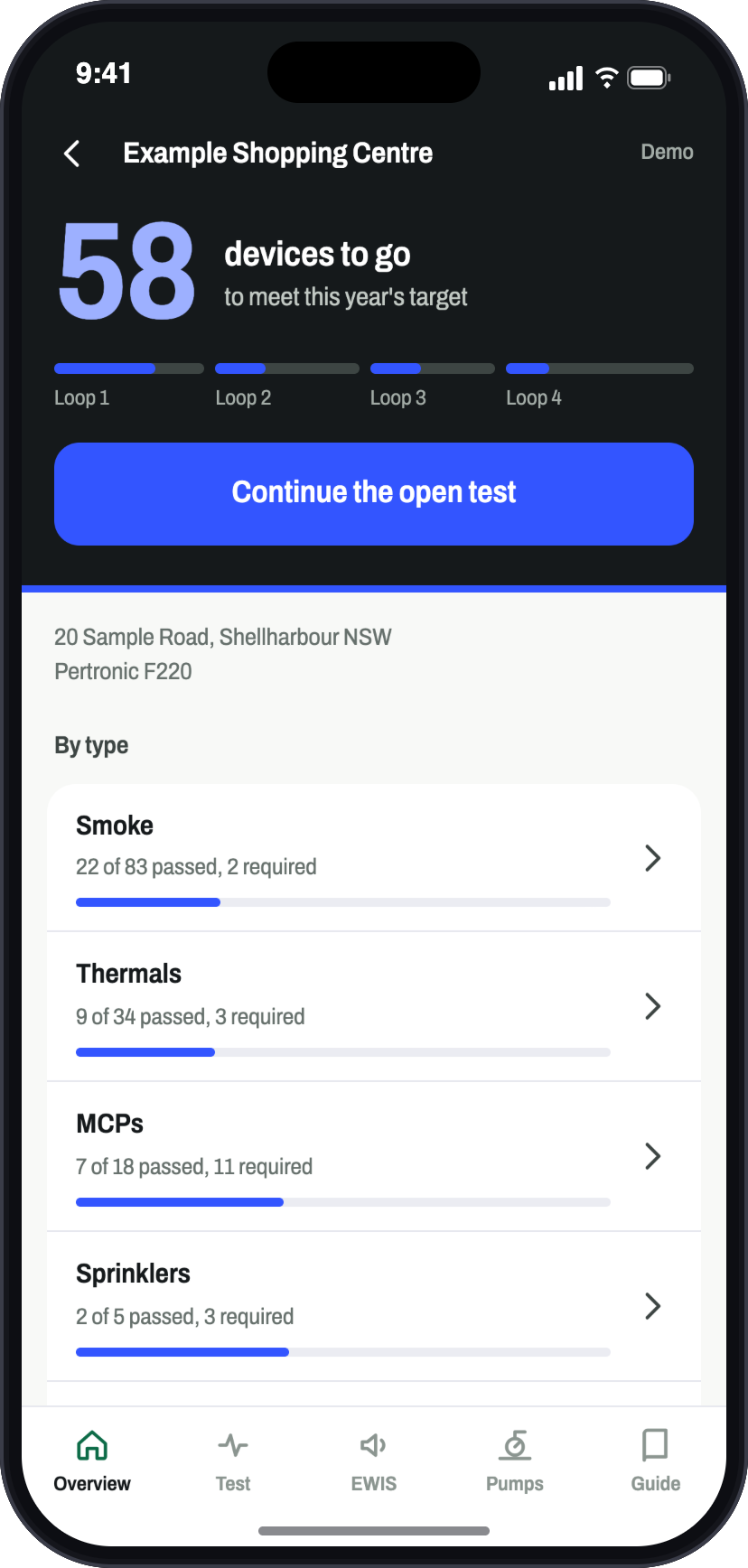
The app works out the yearly target circuit by circuit, from AS 1851-2012 with Amendment 1. Every rule in it points to the clause it came from.
| Smoke detectors | Half of each circuit, every year |
|---|---|
| Heat detectors | A fifth of each circuit, counting the last one |
| Manual call points | All of them, every year |
| After a failure | 10 more on that circuit, as clause G16.1 asks |
More than detectors
The app carries the routine service schedule for the dry fire equipment that reports to the panel. Items only appear if that building has them.
Warning systems
EWIS and occupant warning checks, speaker by speaker, warden phones, and a pin on the floor plan where something failed.
Fans and smoke control
The fire fan matrix: each alarm zone against each fan and damper, checked at the panel and at the fan.
Pumps and sprinkler signals
Flow switches, valve monitors and pump alarms, each on its own six-monthly or monthly period.
Faults and supervision
The fault list for the panel, power supply and signalling links, with the table item each one comes from.
Contract scope
Not contracted for fans or sprinklers at a site? Switch them off for that building and the test closes without them.
Tests over several days
Leave a test open, come back tomorrow, carry on. A finished test can be reopened if something was missed.
The office sees it as it happens
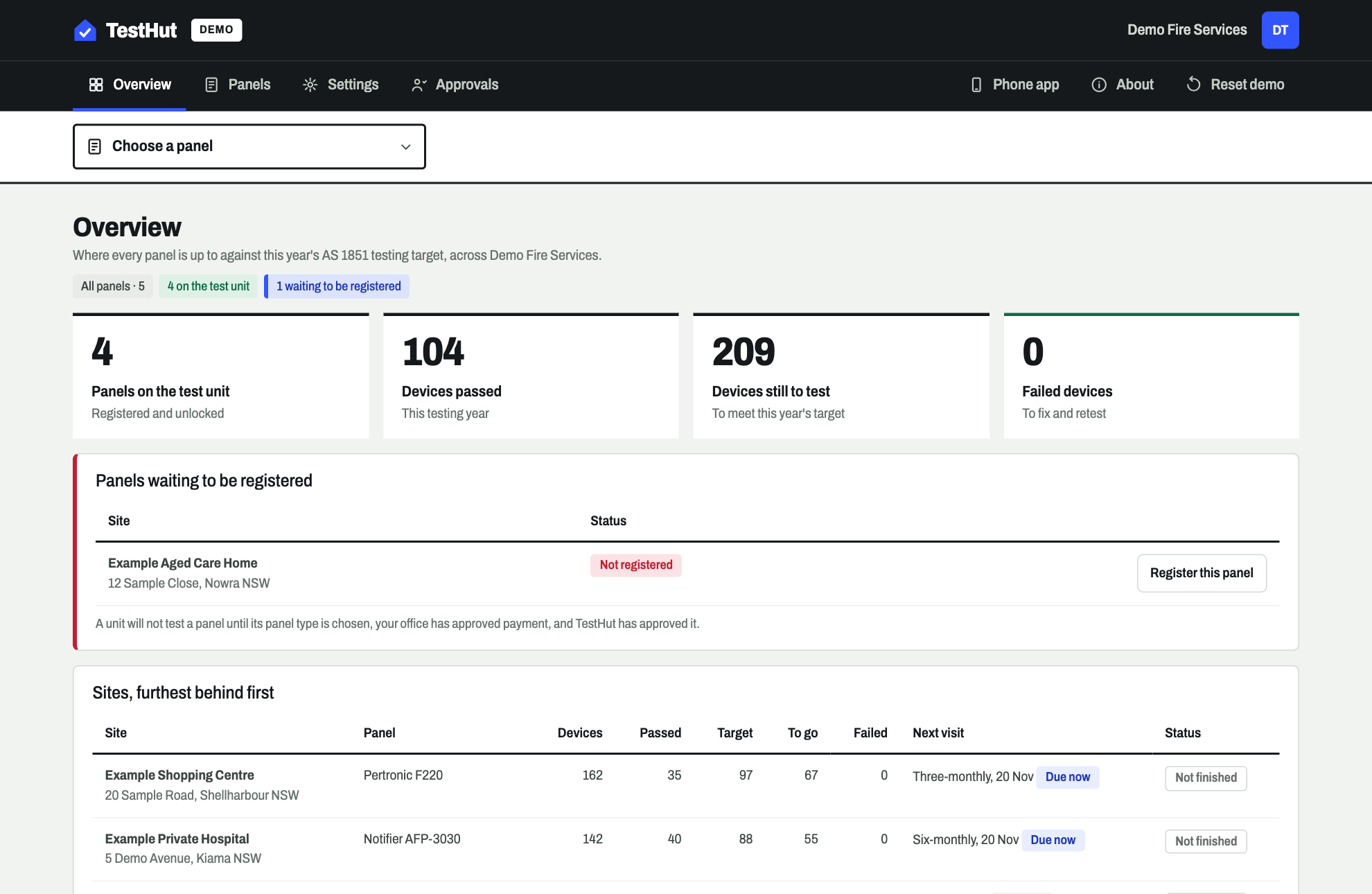
The portal shows every building, how far through the year it is, what failed and what is waiting on a quote. Panels are registered by the office, so a technician cannot start billing on a new building by accident.
Priced per building, per year
$450 a year for each building, less as you add more. $1,500 once for each test unit. One unit does as many buildings as one technician can get to.